A fresh cut: Barbering is back at Clover Park Technical College
By Jean Borst
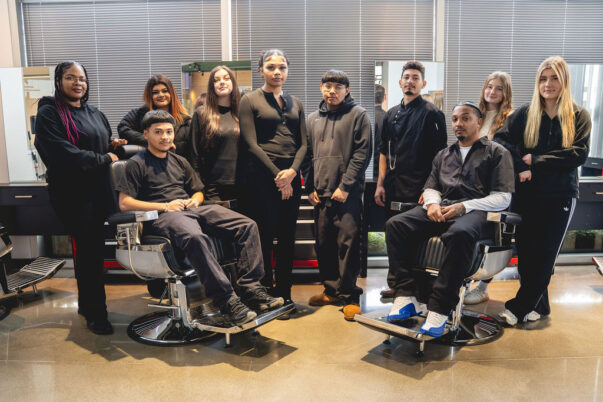
After a long break, Barbering is back at Clover Park Technical College. The new program, which launched this month, builds on what worked in the past while adding a fresh approach that meets the needs of today’s students and workforce.
Designed with purpose
CPTC first offered barbering in the early 2000s. But like several programs across the college, it was paused during the 2008 recession. When CPTC began exploring its return, the focus was on practicality: Was this a program that could deliver real value?
“The college is always looking at ways we can support our students and the community,” said Dean of Instruction Michelle Hillesland. “We also look at factors like program length, program cost and – most important – does it lead to a good job.”
Barbering checked every box, from training time to long-term career possibilities.
Barbering positions in Washington are projected to grow by about 11 percent between 2022 and 2032, translating to hundreds of job openings statewide each year.
The four-quarter program can be completed in about a year, and the earning potential is strong. According to the U.S. Department of Labor, barbers in the Puget Sound region earn a median wage of nearly $80,000 – well above the national average. With the living wage in Tacoma estimated at around $53,000, barbering offers a clear and realistic pathway to a sustainable career.
The job outlook is just as sharp. Barbering positions in Washington are projected to grow by about 11 percent between 2022 and 2032, translating to hundreds of job openings statewide each year.
Shaped by industry experience
Faculty expertise was another key factor behind the program’s launch. Eric Codrington, a long time instructor in CPTC’s Cosmetology program, partnered with Curtis Rice, a well-respected local barber and educator, to design the curriculum.
Between them, they brought years of teaching and real-world industry experience to the table. The result is a program that blends technical skills, theory and professionalism. Students begin by learning the science of hair and scalp health, then move into hands-on barbering techniques – building a strong foundation for long-term success. Upon completion of the program, graduates are fully prepared for licensure and entry-level positions in the field.
More than a haircut
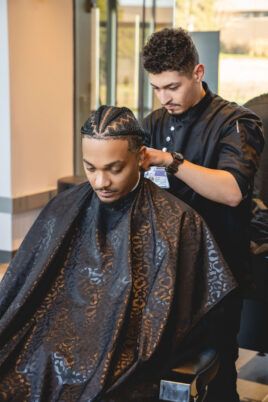
Barbering today looks very different than it did a generation ago. While the profession was once largely male-dominated, it’s becoming increasingly diverse, welcoming students of all genders, backgrounds and life experiences.
Barbering – and cosmetology – also offer accessible career pathways for a wide range of learners, including those impacted by the criminal justice system. CPTC has long supported this inclusive approach, offering cosmetology training at the Purdy Correctional Facility and reinforcing the idea that these careers are open and attainable.
But as the profession evolves, there’s also renewed appreciation for old traditions that have been lost along the way – and Codrington is intentional about reconnecting barbering with its roots.
“Barbershops were once central gathering places where people connected, shared stories and built community,” he said. “I’m working closely with local barbers to help bring that spirit back, emphasizing not only technical excellence, but the cultural and community role barbers play.”
Growing interest, built-in flexibility
The program is only just getting off the ground, but interest has been strong. The first cohort includes 11 students, with room to grow to 20. There’s also interest from practicing cosmetologists, hair designers and current cosmetology students who are close to completing their training and looking to add barbering skills.
“The college’s two programs share foundational coursework, such as sanitation, safety and hair theory,” Hillesland said. “Students who would like to take both programs won’t need to repeat classes they’ve already completed. That flexibility makes it easier to build skills and expand their career options.”
For now, CPTC will offer its Barbering certificate once each winter quarter on its Lakewood campus. Classes are held during the day, but additional schedules may be added if student interest continues to grow.
Opening the doors to the community
Beginning spring quarter 2026, the program will also offer limited barbering services to the public, following a similar model to CPTC’s cosmetology salon. The barbering salon is in the northeast corner of the McGavick Center (Building 23) – one of the most visible and accessible spots on campus. The location offers convenient parking and a public-facing layout that supports both student learning and community access.
Community members can expect classic barbershop service, including haircuts, clipper cuts, beard and head shaving, beard trims and shape-ups, scalp massages and shampooing. All services will be provided by students under close faculty supervision, with low costs designed to cover supplies and overhead.
“The true focus behind offering services to the public is hands-on learning,” Hillesland said. “It’s an opportunity to give students the experience they need to step confidently into the profession.”
Learn more about CPTC’s new Barbering program.